
Practical AI Governance System for a Polish Company
We recently worked with a Polish company to develop a comprehensive framework for regulating the use of AI within their organisation.
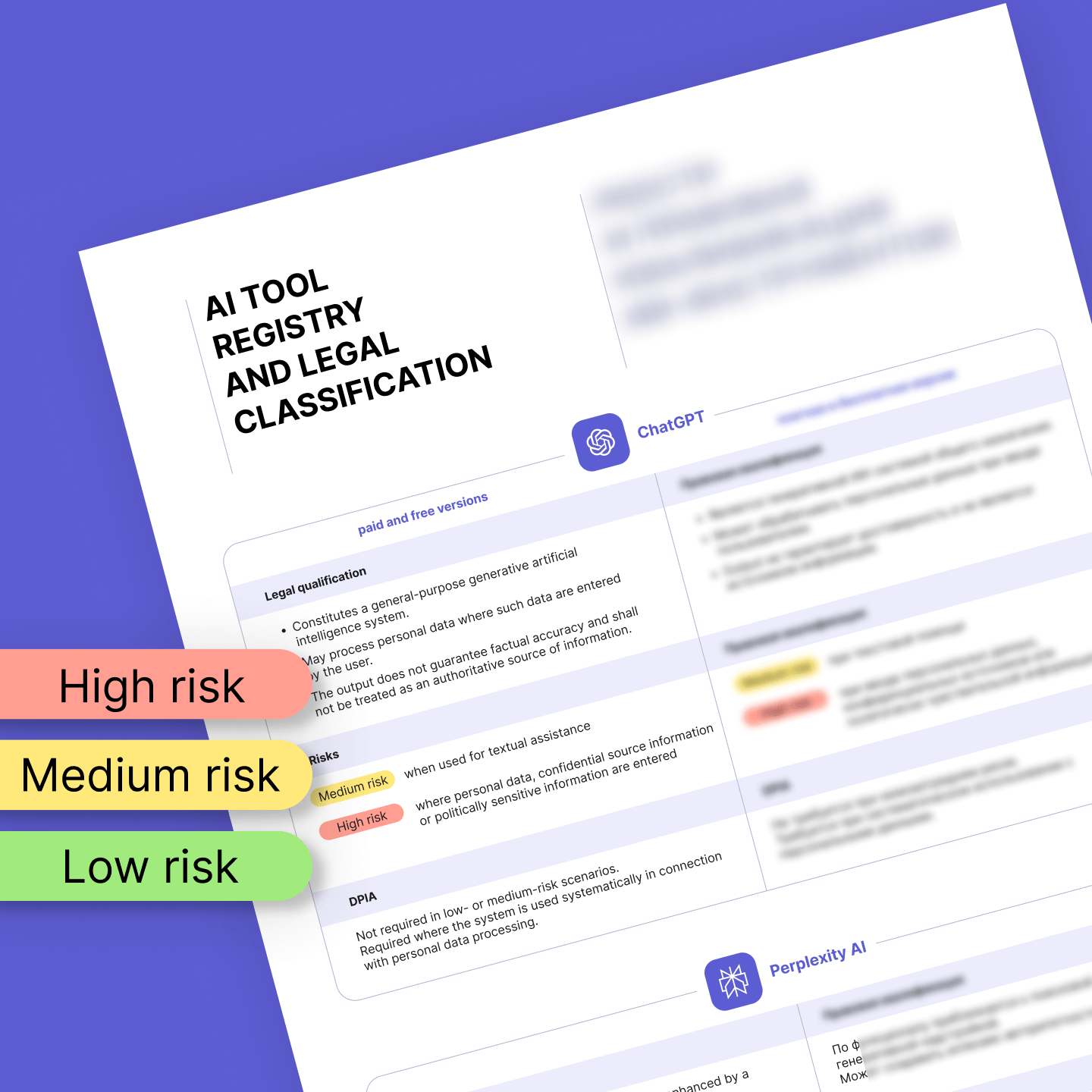
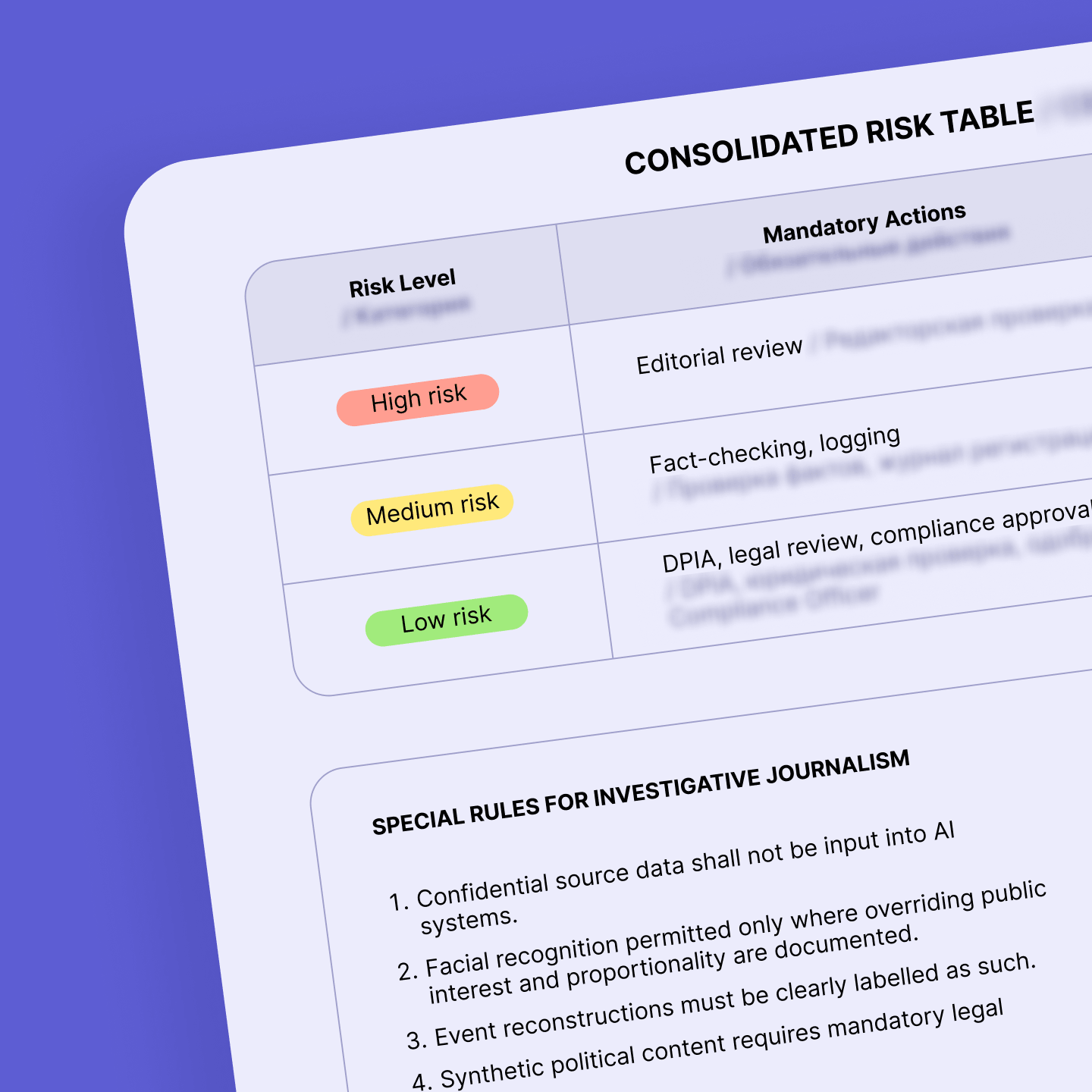
Rather than relying on generic policies, we started by analysing how AI is actually used: which tools are involved, what operational specifics exist, which jurisdictions apply, and what business objectives need to be protected. Based on this, we designed a tailored set of documents covering internal AI governance, risk allocation, compliance requirements, and practical usage guidelines.
At the same time, we treated this not as a formal exercise, but as an implementation task.
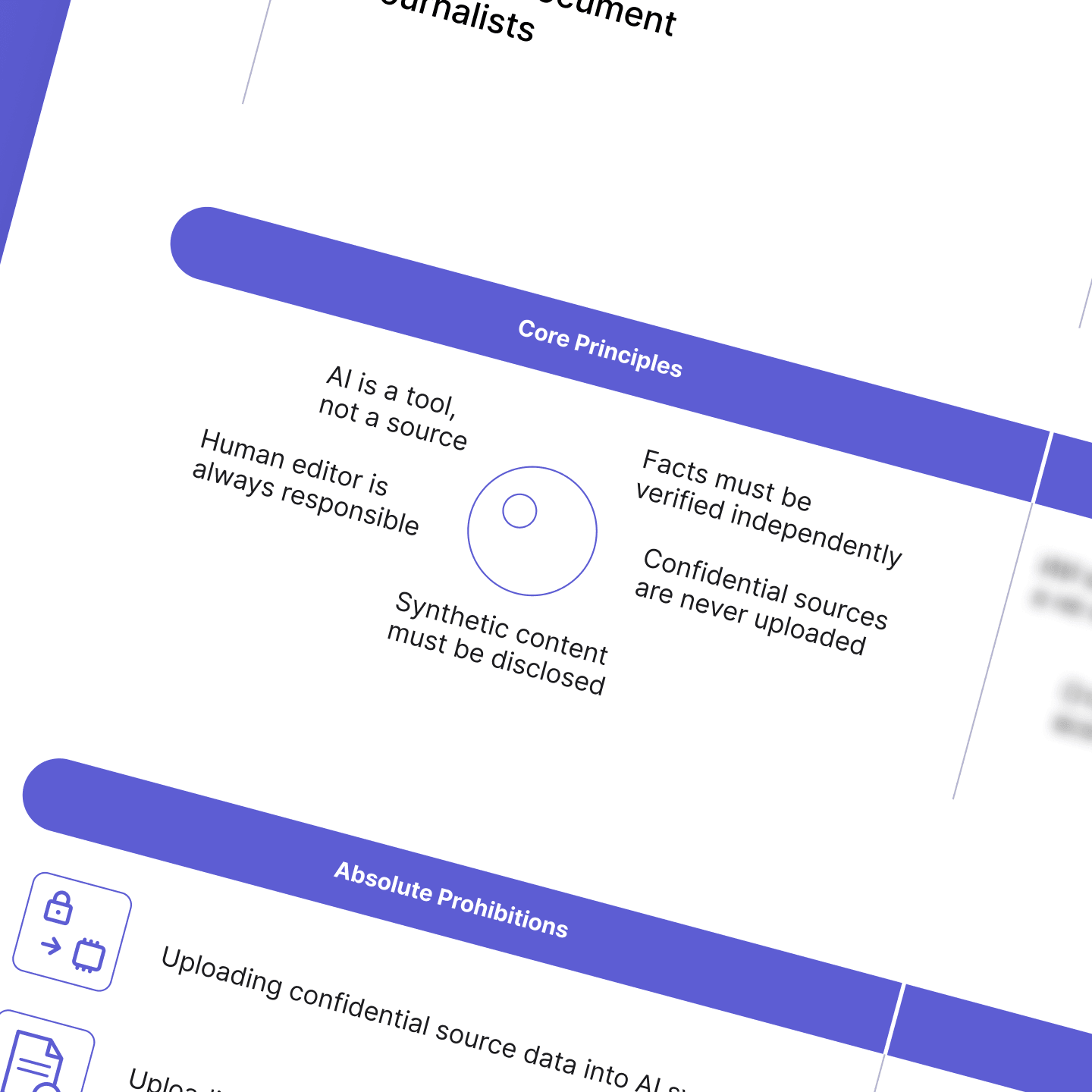
Using legal design principles, we made the documents structured, readable, and usable in everyday workflows. To reinforce this, we also created a practical workbook for employees, a hands-on guide for navigating AI use within the company’s internal rules.
The outcome is not just documentation, but an operational system for managing AI use.
If you are looking to structure and regulate how AI is used inside your company, feel free to reach out!
Rather than relying on generic policies, we started by analysing how AI is actually used: which tools are involved, what operational specifics exist, which jurisdictions apply, and what business objectives need to be protected. Based on this, we designed a tailored set of documents covering internal AI governance, risk allocation, compliance requirements, and practical usage guidelines.
At the same time, we treated this not as a formal exercise, but as an implementation task.
Using legal design principles, we made the documents structured, readable, and usable in everyday workflows. To reinforce this, we also created a practical workbook for employees, a hands-on guide for navigating AI use within the company’s internal rules.
The outcome is not just documentation, but an operational system for managing AI use.
If you are looking to structure and regulate how AI is used inside your company, feel free to reach out!

Legal information:
MMC «Dejured»
№ (VÖEN) 2008126981
Address : AZ1025, Baki şəhəri Xətai rayonu, 1-ci Yaşil Ada, ev 5, «Ağ Şəhər»